Transportation challenges accepted.
Automotive electronics has been a vibrant and highly lucrative market for several decades, and it continues to grow. There are several core dynamics driving the evolution of vehicle design – and having robust and reliable supply channels via which constituent components can be sourced is essential.
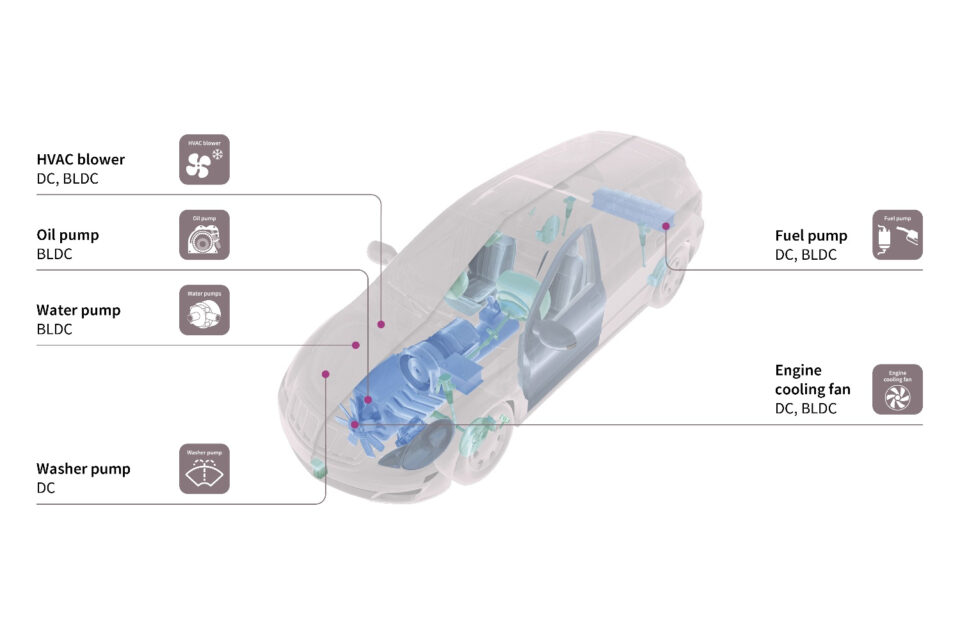
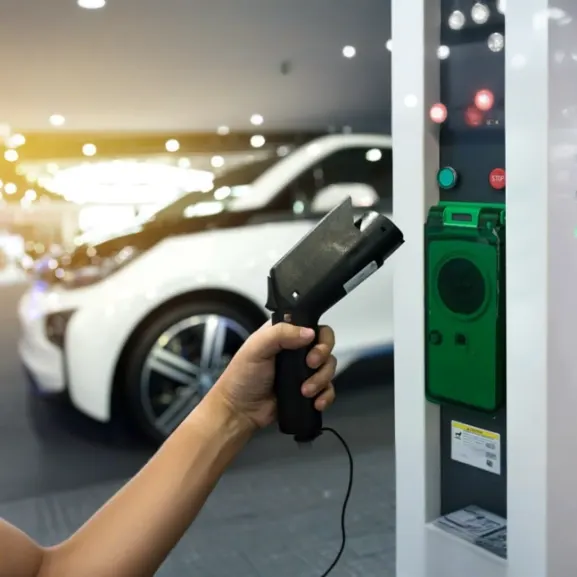
With an expansive range of AEC-qualified products ready to ship from stock, EBV can provide customers with the cutting-edge technology needed to bring vehicle models to market that have real differentiation. We offer the power management ICs, current sensors and MCUs needed for battery management system (BMS) implementations, plus the advanced optoelectronics that more sophisticated vehicle lighting is now calling for. Our inventory includes the driver ICs required to control pumps, fans and brushed or BLDC motors, as well as the analogue ICs necessary for conducting signal conditioning and data conversion. The FPGAs and memories for ADAS systems are available too, as are the touch-enabled displays that will provide human machines interfaces (HMIs) for vehicles’ central control consoles. High resolution magnetic sensors for throttle-by-wire, steer-by-wire and brake-by-wire can be specified, in addition to the pressure sensors for flow control and other vital diagnostic functions. We sell the Ethernet switches for high-speed IVN, plus the circuit protection devices needed to safeguard against voltage transients and ESD strikes. The rectifier modules and MOSFETs that EV chargers mandate are also stocked.
Redefining vehicle powertrains
Improvements to sensor technology have led to more effective engine management systems, meaning that internal combustion engine (ICE) vehicles can achieve greater fuel economy. By incorporating the latest high-voltage power discretes, the on-board chargers (OBCs), DC/DC
converters and traction inverters of electric vehicles (EVs) can attain elevated operational parameters. Consequently, it will be possible for powertrains to be implemented that will enable faster charging times and longer vehicle ranges.
Sensor augmentation
X-by-wire technology is becoming increasingly prevalent in modern automobile designs. By swapping traditional mechanical elements, which are heavy and bulky, with space-saving lightweight electronic equivalents, it is possible to reduce the overall weight of vehicles considerably – making them much more fuel efficient. Another advantage of x-by-wire is that it eliminates the risk of mechanical failures occurring, which increases operational reliability. Alongside this, ever greater numbers of cameras and image sensors are being added to vehicles, and this will be pivotal in progressing from current driver assistance capabilities towards greater levels of autonomy.
Internal and external communication
In time, use of LiDAR and radar (either 24GHz or 77GHz) will become more widespread, allowing detailed renderings of the surrounding environment – so that potentially dangerous situations can be identified and actions taken in response. With more data being acquired by the vehicle’s various
sensors, higher speed in-vehicle networking (IVN) is needed to support its transportation. Long-serving CAN and LIN infrastructure is now being superseded by multi-Gbit automotive Ethernet. Domain based architectures are starting to be replaced by zonal ones.
The breadth of wireless technologies is expanding too, as cars become more connected. Vehicle-to-vehicle (V2V) communication will result in mesh network arrangements being established, so that information may be shared between cars. This will mean that traffic jams and other forms of
disruption that arise can be avoided. The data being carried over vehicle-to-infrastructure (V2I) communication will help to improve traffic flows, thereby minimising congestion and curbing pollution. Bluetooth and Wi-Fi connectivity is transforming vehicle interiors, leading to more compelling user experiences for occupants that are better aligned with what they would expect in their homes.
Next generation optoelectronics
Migration to solid state technology has proved highly beneficial to vehicle lighting, making it more reliable and energy efficient, as well as enabling new functionality to be supported. RGB LEDs permit the ambient conditions within the cabin to be adjusted to fit in with the personal preferences of the driver/occupants. Exterior lighting has also been enhanced, with the use of laser-power headlamps extending illumination range substantially – allowing obstacles on the road ahead to be seen at a much earlier stage.
Why EBV?
EBV Elektronik is able to draw on many years’ experience serving the world’s leading car brands and their system integration partners. We are agile enough to deal with the acute pressures which come with the ‘just in time’ manufacturing strategy that the automotive industry follows. Our scope goes beyond ICE and EV passenger cars, covering motorbikes, mopeds, e-bikes, construction vehicles, agricultural equipment, forklifts trucks and commercial vehicles. Key franchises include Aceinna, ams OSRAM Group, Broadcom, Infineon, ISSI, Microchip, NXP, onsemi and STMicroelectronics.